























Kratom is often marketed as a “natural escape”—a plant-based powder you’ll find in capsules, supplement bottles, head shops, gas stations, and even energy drinks. Depending on how it’s promoted, kratom is said to help you relax, boost your mood, or sharpen your focus.
That’s part of the appeal. The same product is sold as both a calming aid and an energy booster. Feeling stressed? Kratom is positioned as a way to unwind. Need more energy? It’s marketed as a pick-me-up. More recently, it’s also been rebranded as an “ancient herbal remedy,” fitting neatly into the booming wellness industry alongside teas, oils, and other natural products.
But there’s another side to the story that often gets overlooked. Regular use can lead to dependence, disrupt daily life, and bring on difficult withdrawal symptoms when you stop.
This guide is for anyone struggling with kratom use—or supporting someone who is. It breaks down what kratom does, why it can be hard to quit, and what to expect when you decide to stop.
What is Kratom?
Kratom (sometimes sold as ‘Ketum’) is a pharmacological botanical with documented use in Southeast Asia. Traditionally, laborers chewed or brewed the leaves of Mitragyna speciosa to numb fatigue and pain. Today, in the U.S., kratom is sold in powders, teas, capsules, and even “kratom shots.”
Some use it for anxiety or pain relief, others for a legal high. Notably, kratom doesn’t show up on standard drug tests, making it a frequent substitute for opioids or stimulants. In small doses, kratom acts like a stimulant; in larger doses, it mimics opiates.
Its two active ingredients—mitragynine and 7-hydroxymitragynine—target opioid receptors. The latter, particularly potent, is often added synthetically to boost recreational effects. A kratom high can last up to 7 hours, depending on dose and delivery method.
Is Kratom Legal?
Federally, kratom is unscheduled but classified as a “drug of concern.” The FDA warns against its use due to addiction risks and potential product contamination. Legality varies by state:
- Banned in: Alabama, Arkansas, Indiana, Rhode Island, Vermont, and Wisconsin.
- Regulated under the Kratom Consumer Protection Act (KCPA): Arizona, Georgia, Nevada, Oregon, Texas, Virginia.
- Unregulated elsewhere, meaning purity and dosage vary wildly by brand—buyer beware.
There is growing pressure for federal regulation to curb unsafe manufacturing practices and misleading marketing.
Understanding the Long-Term Effects of Kratom
Before withdrawal even begins, long-term kratom use can take a serious toll on both the body and mind. What may start as occasional use can gradually lead to kratom dependence, with effects that become more noticeable over time.
Physical effects of long-term kratom use:
Ongoing use may place stress on vital organs, including the liver and kidneys, and disrupt normal hormonal balance. Some individuals also report fatigue, changes in appetite, and potential impacts on reproductive health, including decreased libido or possible infertility.
Mental and cognitive effects:
Kratom use can interfere with cognitive function, making it harder to focus, retain information, or think clearly. Over time, individuals may experience memory problems, slowed thinking, and a sense of emotional numbness. There is also concern that chronic use may affect neuroplasticity, limiting the brain’s ability to adapt and recover.
Psychological risks of kratom addiction:
Long-term use is associated with worsening mental health symptoms, including depression, anxiety, irritability, and mood instability. In more severe cases, individuals may experience paranoia, hallucinations, depersonalization, or persistent brain fog that impacts daily functioning.
Beyond these internal effects, kratom addiction often begins to show up in everyday life. Social withdrawal, increased irritability, and a gradual breakdown in relationships are common. Many people find themselves pulling away from family, struggling at work, or losing interest in activities they once enjoyed.
Recognizing these signs early can make a meaningful difference. With the right treatment and support, it’s possible to reverse many of these effects and rebuild a healthier, more stable life.
Common Kratom Withdrawal Symptoms
Kratom withdrawal mirrors both stimulant and opioid comedowns – it is truly the worst of both worlds.
Physical Symptoms of Kratom Withdrawal:
- Muscle aches
- Restless legs
- Chills, sweating
- Nausea, cramps, diarrhea
- Insomnia, fatigue
Psychological Symptoms of Kratom Withdrawal:
- Anxiety
- Depression
- Intense cravings
- Social withdrawal
- Irritability and mood swings
- Restlessness or agitation
- Difficulty concentrating (brain fog)
- Insomnia or disrupted sleep patterns
Relapse often stems from a desire to end the discomfort, not to chase a high.
How Long Does Kratom Withdrawal Last?
A kratom high is relatively short-lived, typically lasting only a few hours. In contrast, kratom withdrawal can persist for up to two weeks.
This imbalance is part of what makes kratom addiction so difficult to overcome. While the effects wear off quickly, withdrawal symptoms can linger due to the way kratom’s active compounds—mitragynine and 7-hydroxymitragynine—interact with the brain. These substances affect not only opioid receptors but may also influence serotonin and dopamine systems, contributing to prolonged withdrawal and ongoing cravings.
The length of withdrawal depends on dose, duration, and individual physiology, but here’s a general timeline created with stats from the National Institute on Drug Abuse:
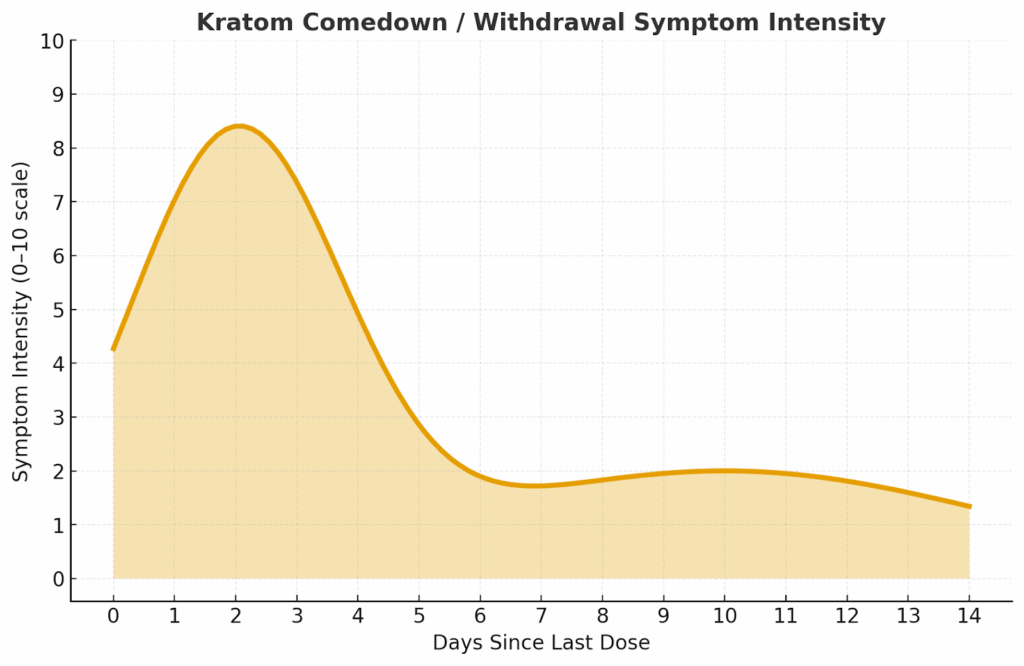
0–6 Hours: Early restlessness, fatigue, unease.
6–24 Hours: Onset of aches, nausea, insomnia, mood changes.
Days 1–3: Peak symptoms—intense anxiety, sleeplessness, muscle cramps.
Days 4–7: Symptoms begin to subside, though exhaustion remains.
Week 2+: Post-Acute Withdrawal Syndrome (PAWS) may occur—emotional instability, vivid dreams, and lingering anxiety or depression that can last weeks or months.
Alternatives to Kratom
If you’re using kratom to self-medicate, consider safer, more sustainable options:
Safer alternatives for pain relief include:
- Physical therapy, yoga, and acupuncture
- NSAIDs like ibuprofen or acetaminophen (in proper doses)
- Nutrient-rich anti-inflammatory diets
- Functional medicine, sound baths, Reiki, and sports massage
Alternatives to Kratom for energy and focus:
- Adjust sleep hygiene
- Natural adaptogens (rhodiola, ashwagandha)
- Safe caffeine use
Alternatives to Kratom for anxiety relief:
- Cognitive Behavioral Therapy (CBT)
- Journaling and mindfulness
- Supplements like magnesium, omega-3s
- Ketamine-assisted therapy for treatment-resistant cases
The Benefits of Kratom Detox
While some attempt kratom detox at home, supervised medical detox from kratom is safer and often more effective.
Medical detox may offer:
- 24/7 monitoring
- Medication to ease symptoms
- Nutritional and psychological support
- Planning for aftercare and relapse prevention
- Breakthrough treatments like ketamine assisted therapy
Contrary to internet forums that downplay it, kratom withdrawal can be severe—especially for high-dose or long-term users.
Kratom Addiction Treatment in Utah
Kratom may wear the face of a “natural” remedy, but beneath its marketing lies the potential for real harm. If you’re caught in the spiral, know this: detox isn’t the end. It’s the beginning of a return to yourself. With help, the cycle can be broken.
Detox is an important first step, but it’s not the finish line. Lasting recovery from kratom addiction requires deeper healing—addressing the underlying patterns, stressors, and mental health challenges that fuel continued use. With the right support, it’s possible to regain clarity, stability, and a sense of control over your life again.
At Maple Mountain Mental Health and Wellness, we offer comprehensive kratom addiction treatment that goes beyond symptom management. Our approach combines evidence-based therapies, functional medicine, and holistic care to support your mind and body through every stage of recovery. Whether you’re dealing with kratom dependence, polysubstance use, or co-occurring conditions like anxiety or depression, our team creates a personalized path forward designed for sustainable healing.

Frequently Asked Questions About Kratom
Is kratom addictive?
Yes, kratom can be addictive. While it’s often marketed as a natural supplement, regular use can lead to physical dependence and withdrawal symptoms, especially at higher doses or with long-term use.
What are the symptoms of kratom withdrawal?
Kratom withdrawal can include both physical and psychological symptoms such as anxiety, depression, irritability, insomnia, muscle aches, nausea, and intense cravings. Symptoms can vary in severity depending on usage patterns.
How long does kratom withdrawal last?
Withdrawal symptoms typically begin within 12–24 hours after the last dose and can last up to one to two weeks. Some individuals may experience lingering psychological effects, such as cravings or mood changes, beyond this period.
Do I need professional treatment for kratom addiction?
While some people attempt to quit on their own, professional treatment can significantly improve outcomes. A structured program provides medical support, therapy, and relapse prevention strategies to help manage withdrawal and address underlying causes of use.
What treatments are available for kratom addiction?
Treatment may include medically supervised detox, individual and group therapy, behavioral health interventions, and holistic approaches such as nutrition and stress management. Programs that address co-occurring mental health conditions tend to be the most effective for long-term recovery.
Sources
[1] National Institute on Drug Abuse. (2022, March 25). Kratom. Retrieved September 3, 2025, from https://nida.nih.gov/research-topics/kratom
[2] National Center for Biotechnology Information. (2022). Kratom. In StatPearls. StatPearls Publishing. Retrieved September 3, 2025, from https://www.ncbi.nlm.nih.gov/books/NBK585120/
[3] Manus, J. P., Crenshaw, R. C., Ringer, L. C., Towers, S. A., Paige, N. B., Leon, F., McCurdy, C. R., & Lester, D. B. (2025). Effects of kratom alkaloids on mesolimbic dopamine release. Neuroscience Letters, 850, 138153. https://doi.org/10.1016/j.neulet.2025.138153
[4] National Institute on Drug Abuse. (2022, March 25). Kratom. National Institute on Drug Abuse. Retrieved September 3, 2025, from https://nida.nih.gov/research-topics/kratom
[5] Harper Clinic Utah – Ketamine-assisted therapy